Living Stories Lab
One approach, many forms
Living Stories began with preaching. The same commitments shape everything in the Lab: the whole community interprets together, every age takes part, and everyone steps into the story together.
Each practice is developed and tested at St. Gregory of Nyssa Episcopal Church in San Francisco, then shared with other congregations in forms that are simple and adaptable. The Lab isn't a formal organization yet. It's a home for this work as it grows.
Living Stories Sermons were the Lab's first practice, and they're ready to use now. Two more are taking shape:
Living Stories Pageants
A pageant the congregation writes
Most pageants hand out a finished script. In a Living Stories Pageant, the community builds it together over several weeks, and the time spent writing it becomes time spent dwelling in the story.
Easter 2026
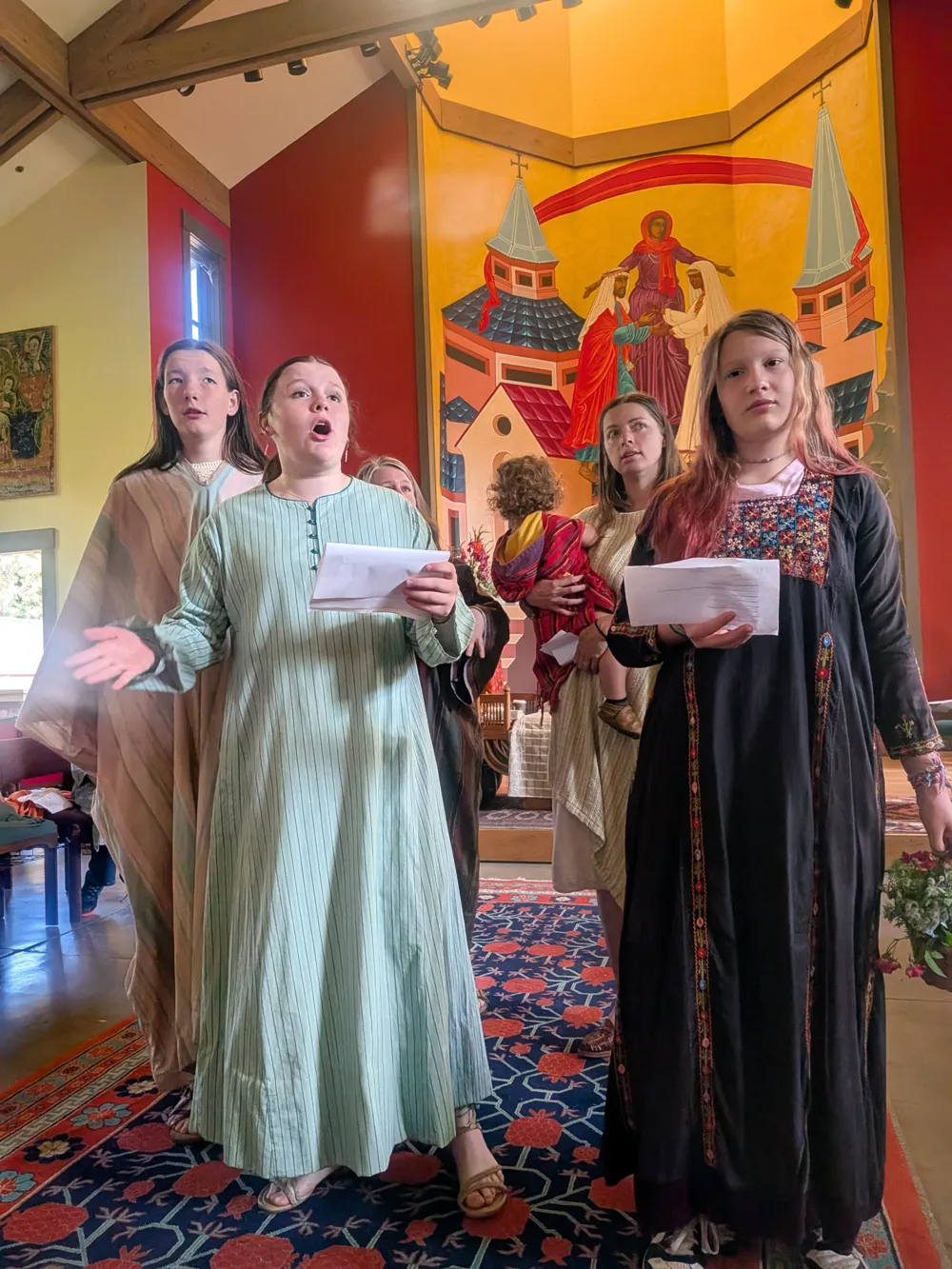
We started by setting the resurrection accounts from all four Gospels side by side. Over two Sundays, people of every age cut them apart with scissors, spread the pieces across tables, and argued about how to arrange them. The group settled on five scenes, mostly from Luke 24, with Mary Magdalene's encounter in the garden from John 20. They chose to keep the moment when the apostles dismiss the women's testimony as nonsense.
Through Lent, the cast revised the script each week. There was no memorization and no auditions, so a five-year-old and an eighty-year-old faced the same low bar. On Easter morning the pageant was performed in the round, in the midst of the congregation, as part of the liturgy.
A guide for other congregations is in the works.
All Saints 2026: Moses, Seen From Behind
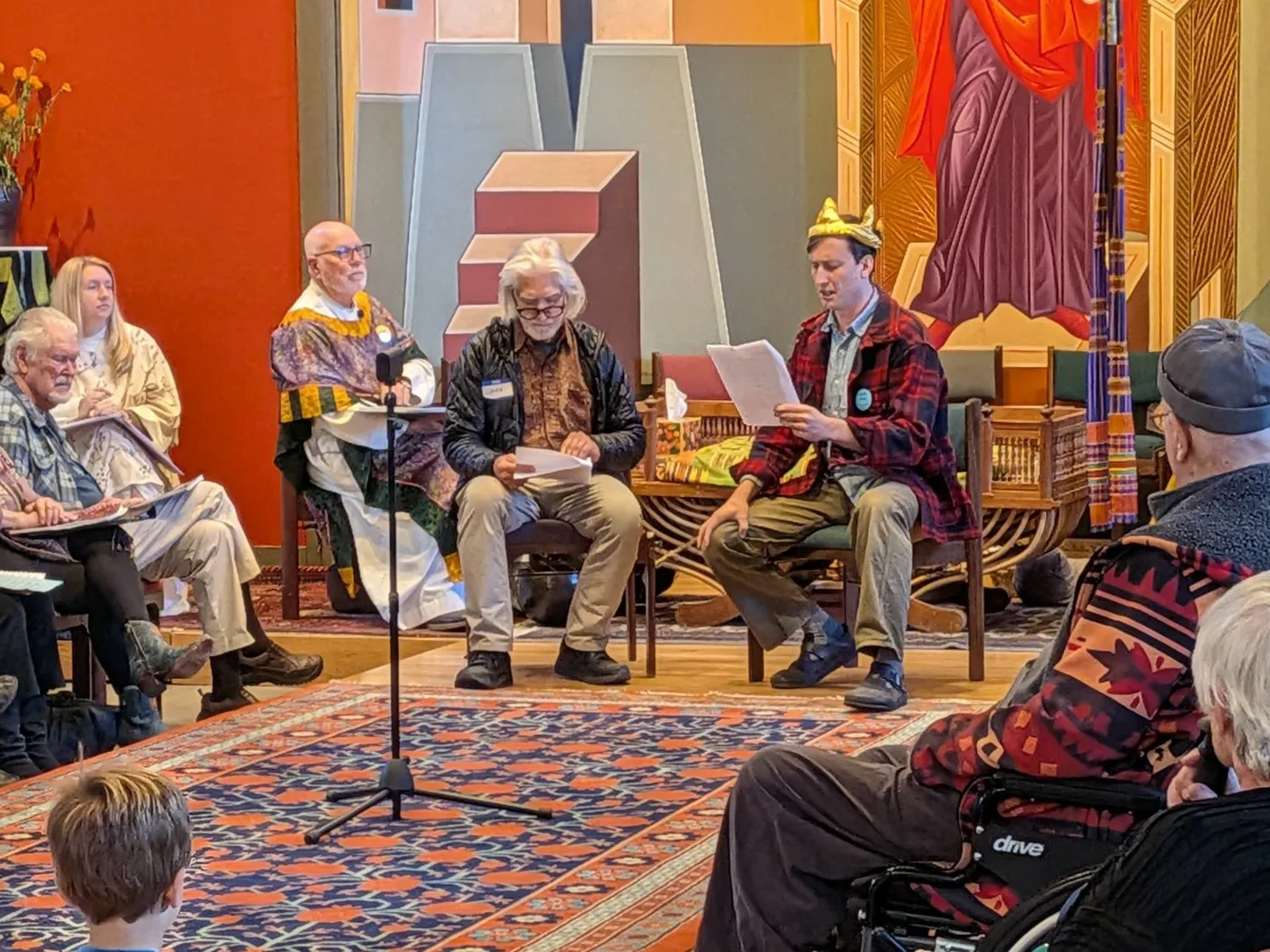
Through the fall, a group met on Sundays to read the Exodus passages from the lectionary together. They decided to tell Moses' life through the people who stood beside him, in imagined conversations after death: Jochebed and Miriam, Aaron and Pharaoh, Zipporah and Joshua, and finally Gregory of Nyssa in dialogue with Moses' staff, with a narrator weaving the scenes together.
The group chose to honor a hard tension in the story: Moses married into a Midianite family, and Israel later made war on Midian. Footnotes in the script mark what comes from Scripture, what comes from tradition, and what the group imagined.
There were no rehearsals. Every part was written to be read cold on the day. On All Saints Sunday the two morning services gathered as one, and the pageant took the place of the readings and the sermon, with hymns between the scenes and the last scene flowing straight into the Lord's Prayer.
Living Stories Councils
Theology you play
Councils are multi-day strategy games for youth. Players join historical factions, prepare arguments on the questions those factions actually faced, and watch real events reshape the board. Each one premiered at FOG Camp, St. Gregory's summer program.
Council one · Available in beta
Theses & Thrones
The English Reformation. Players don't study it; they preach their way through it.
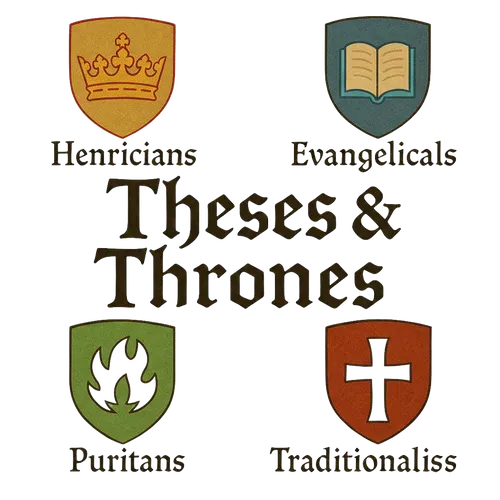
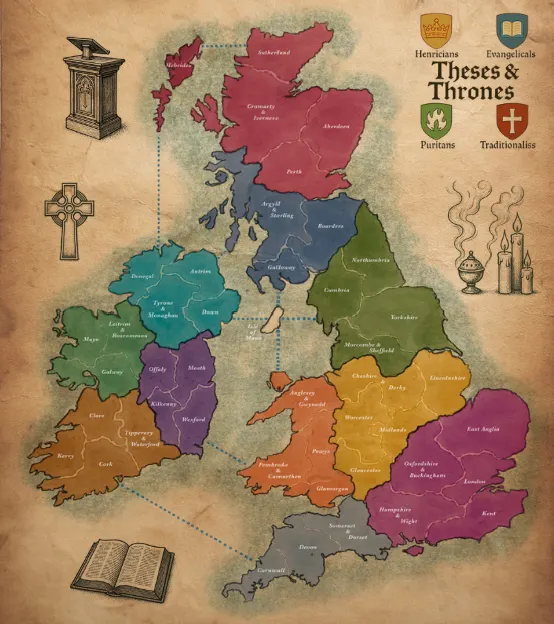
Four factions (Henricians, Evangelicals, Puritans, and Traditionalists) each have real theological positions, a historical theologian, and a team of preachers to deploy across a map of the British Isles. Over five sessions they argue questions like who has authority over the church and whether worship should be in Latin, and test their arguments before judges to win reinforcements. Each session, a real event such as the Act of Supremacy or the Dissolution of the Monasteries reshapes the board.
- Piloted at FOG Camp 2025 with players ages 7 to 17
- Best for middle school through college; 8 players minimum, 12 to 20 ideal
- Sessions run 2 to 4 hours, as a week-long intensive or across several weeks
- Includes faction files, a printable map, and links to order the wooden figures
- Beta access: $200 suggested donation per congregation. Pilot sites that give in-depth feedback may receive an honorarium.
Council two · Coming soon
A House Divided
Roman-occupied Judea in the Second Temple period. Four factions, one fragile peace.
Sadducees, Pharisees, Essenes, and Zealots each hold real convictions about how to stay faithful under empire. Where Theses & Thrones is competitive, A House Divided is cooperative: the factions have to work together to keep Rome's escalating occupation from boiling over, even while they disagree about almost everything.
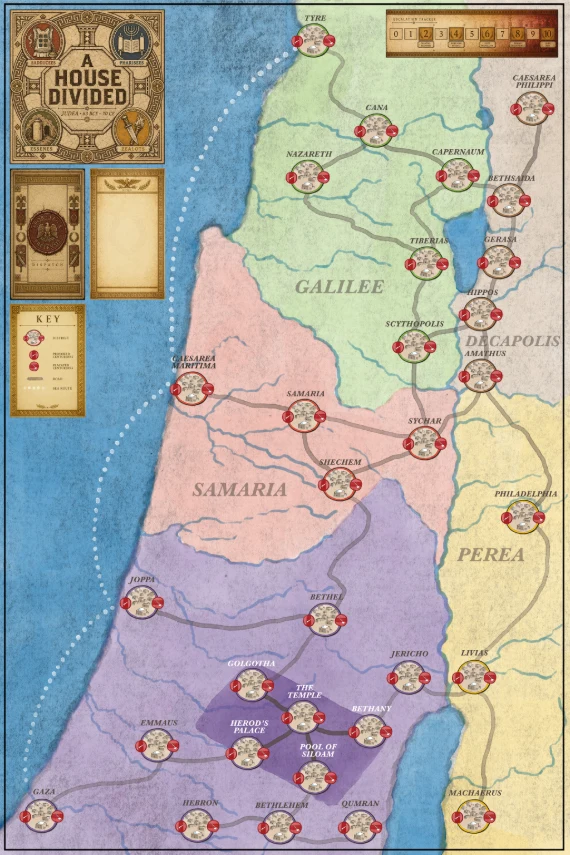
The board spans 31 districts across six regions, from Galilee and the Decapolis to Samaria, Perea, Judea, and Jerusalem. Roman centurions spread district by district, and an escalation tracker shows how close the land is to a crackdown.
Each day opens with a debate over a contested verse that every faction reads differently: the Temple and worship, God's sovereignty and Caesar's taxes, idolatry and resistance, and the hope of a messiah. Across the week, each faction builds something with its hands: a model Temple, a growing scroll, a hidden library sealed in a jar, a banner.
- Premiered at FOG Camp 2026, St. Gregory's summer day camp
- Built for a five-day week, with daily faction files, debates, and crafts
Want to hear when it's ready? Subscribe to the newsletter.
Stay in the loop
The Living Stories newsletter brings new scripts, training opportunities, and other resources for your ministry.