
How it works
From story to shared sermon
A Living Stories Sermon takes the place of the usual sermon. Here is what it looks like, what you need, and how the preacher's role changes.
The steps
Eight steps, one Sunday
Choose your story
Start with the Gospel reading from the Revised Common Lectionary for the Sunday you have in mind.
Prepare with the script
Each script has a materials list, the full Gospel passage with stage directions, and wondering questions. Scripture stays as written; adapt the rest to your context. Do your usual exegesis too, so you can support the congregation wherever the conversation goes.
Gather materials
Use what you have. Felt underlays, wooden figures, and a few printed images are plenty.
Set the space
Invite people to gather close. At St. Gregory's we begin: "Listen to the story with your ears, your eyes, and your heart, and if you want to see or hear better, come close and help everyone to participate."
Tell the story
Let the objects, movements, and words draw people into the narrative.
Wonder together
Ask open-ended wondering questions, welcome every response, and mirror back what you hear.
Wrap up
Thank the congregation and move on to the next part of the liturgy. No summary is needed. Leaving the story open leaves room for the Spirit.
Reflect and grow
Afterward, notice what worked and what to change, and share what you learn with other Living Stories preachers.
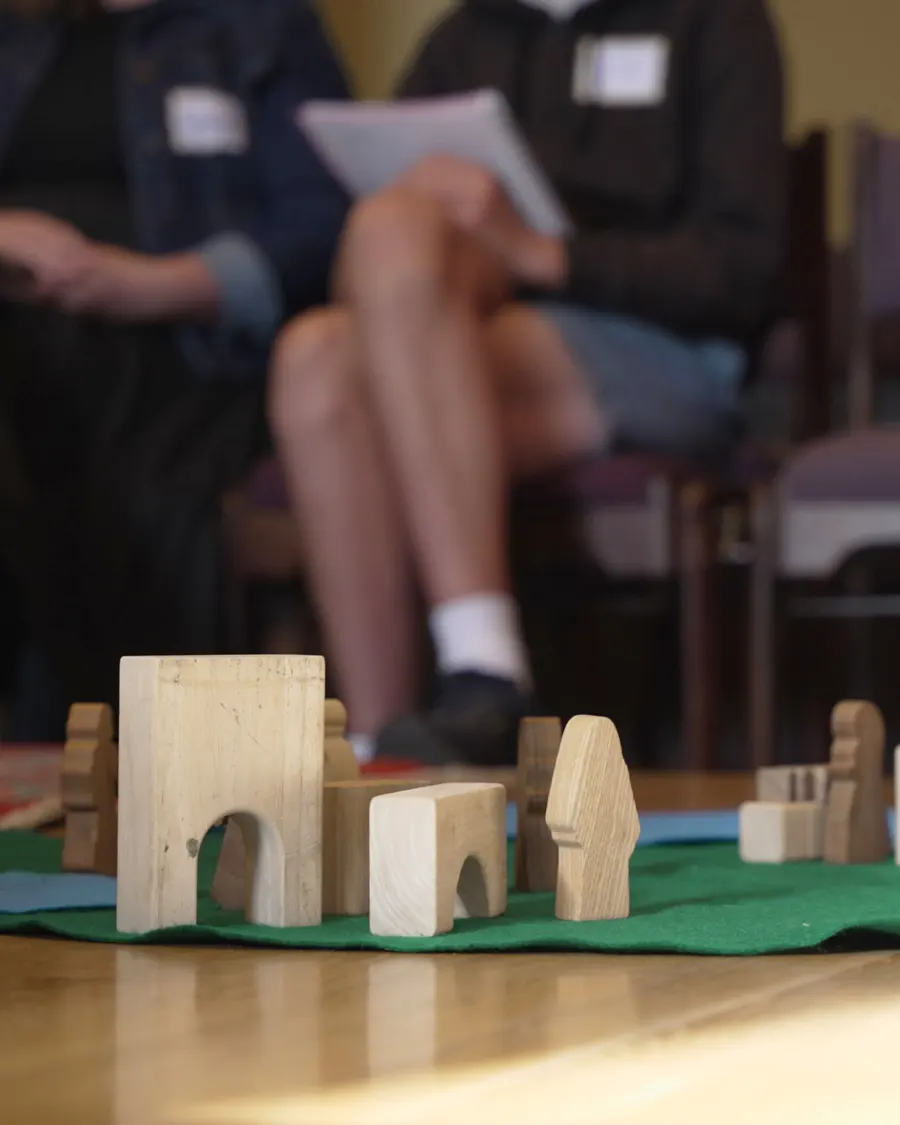
Space tips. Use a central spot where everyone can see the materials. In a large room, pass handheld microphones. Most churches are built for one speaker, so working against the architecture takes some intention.
Materials
Simple on purpose
The materials make the story visible without interpreting it for anyone. Keep them simple and use what your church already has. There is no store; the only materials we make are the printed images that come with the scripts.
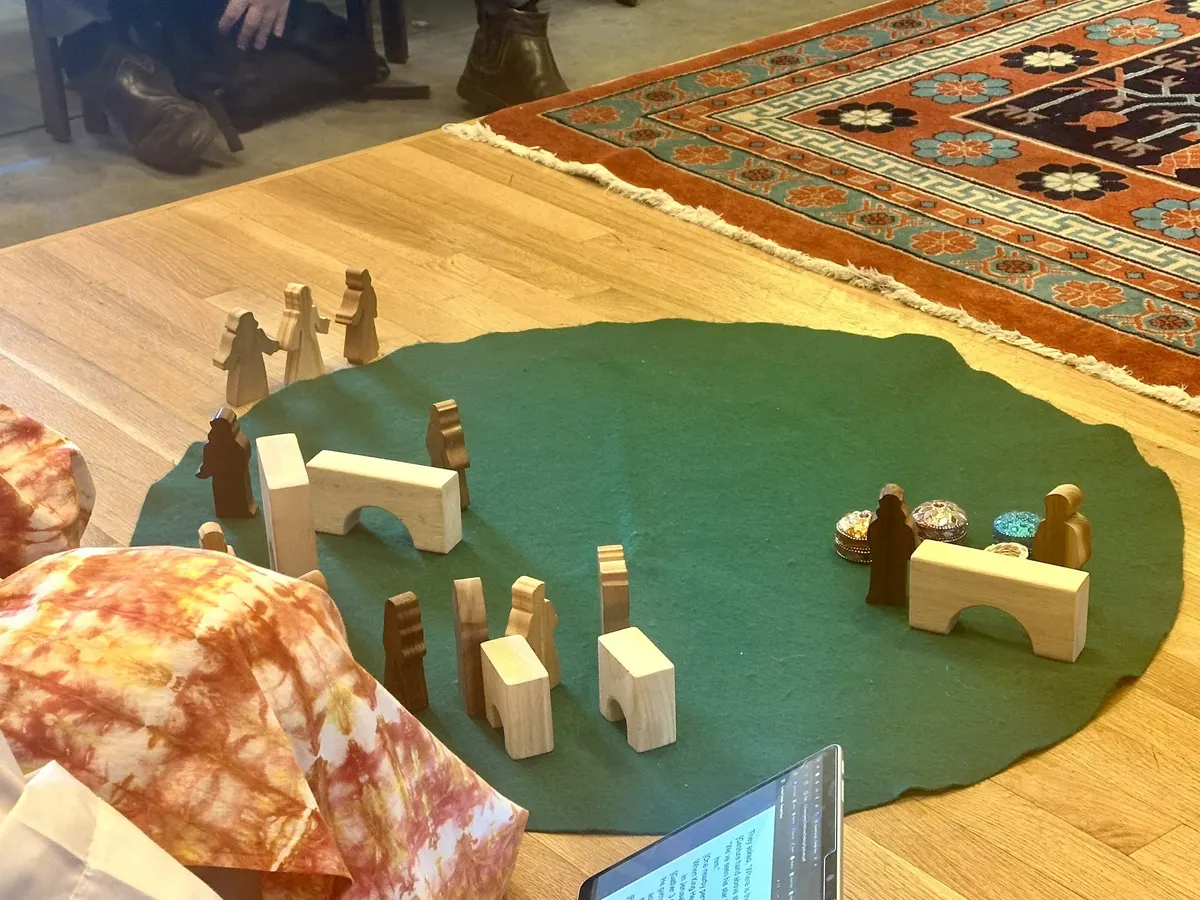
Underlays
Felt or fabric that sets the scene: green for countryside, blue for water, gray for a city. Evoke the setting; don't replicate it.
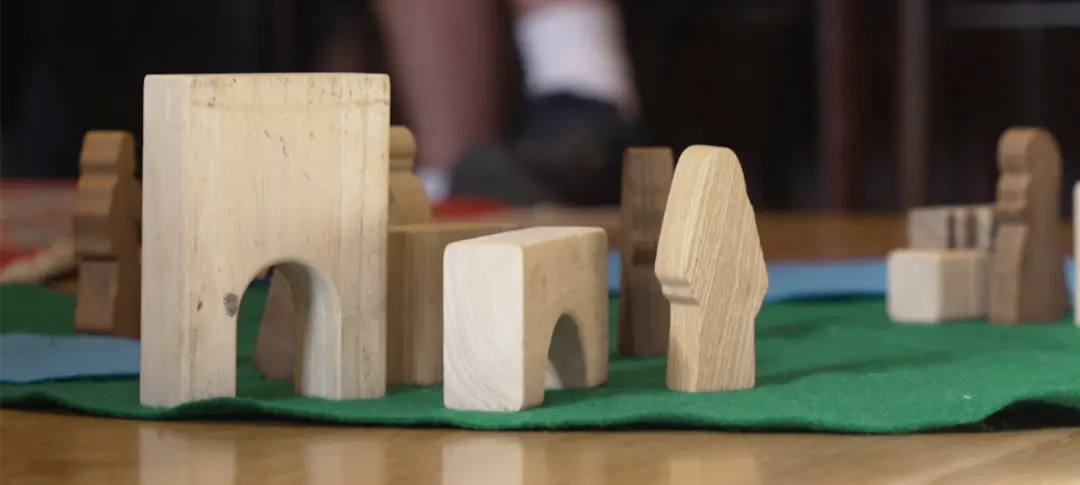
Figures and props
Plain wooden figures for people, plus objects like bread or a boat. Skip detailed pieces like nativity sets, which do the interpreting for the congregation.
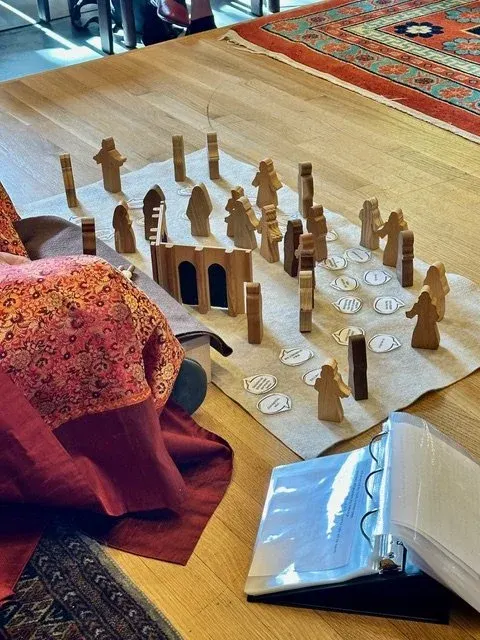
Printed images
Simple line drawings on small easels for teachings and parables. When Jesus reads from Isaiah in Luke 4, a drawing of broken handcuffs stands for release.
Facilitating
The preacher becomes a facilitator
You still tell the story and bring the exegetical knowledge. What changes is that the congregation does the interpreting. Your job is to invite, listen, and trust the Spirit with the outcome.
Ask real questions
Wondering questions have no right answer. Avoid leading questions that point toward the one you're hoping for.
"I wonder what the voice from heaven at Jesus' baptism sounded like."
"I wonder what it was like when people first heard the news about Jesus spreading through the countryside."
Mirror back
Repeat or reframe what each person says, in the best light you can. People feel heard, and everyone in the room can follow along.
Invite depth
When someone reaches for a familiar answer, gently ask what it means to them.
Facilitator"I wonder what Jesus means when he says that those who eat this bread will live forever."
Participant"It means if you believe in Jesus you'll go to heaven."
Facilitator"I wonder what that means to you."
Give knowledge, not interpretation
When someone asks a question, notice whether it asks for knowledge or for an opinion. Answer the first. Hand the second back.
Participant"Who were the Pharisees?"
FacilitatorOffers a short, clear answer about who the Pharisees were and how their teaching related to Jesus'.
Participant"Why didn't Jesus answer them directly?"
Facilitator"I wonder what you imagine, why he didn't do that."
Follow the conversation
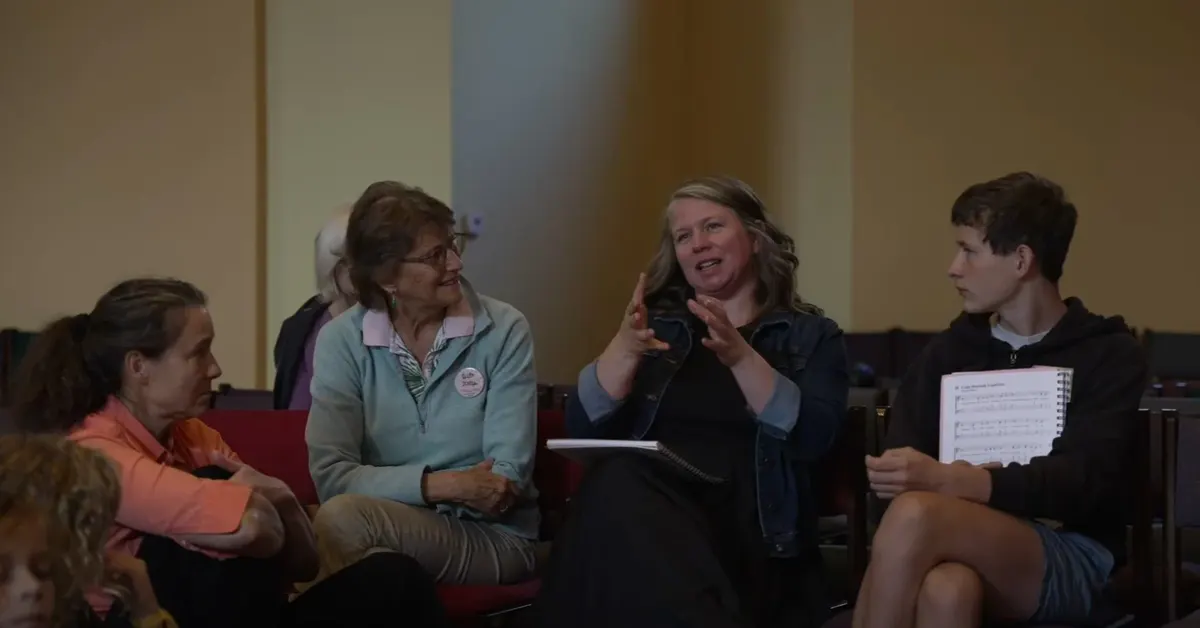
Respond to the group in the moment. When a new idea surfaces, explore it with curiosity instead of steering back to your plan.
Recordings
Watch other congregations
These churches have shared their Living Stories Sermons publicly. If your congregation records one, send it along and we'll add it here.
-
St. Gregory of Nyssa Episcopal Church
San Francisco, CA -
St. Anne's Episcopal Church
Reston, VA -
St. Matthew's Episcopal Church
Parker, CO -
St. Mark's Episcopal Church
Albuquerque, NM
Stay in the loop
The Living Stories newsletter brings new scripts, training opportunities, and other resources for your ministry.